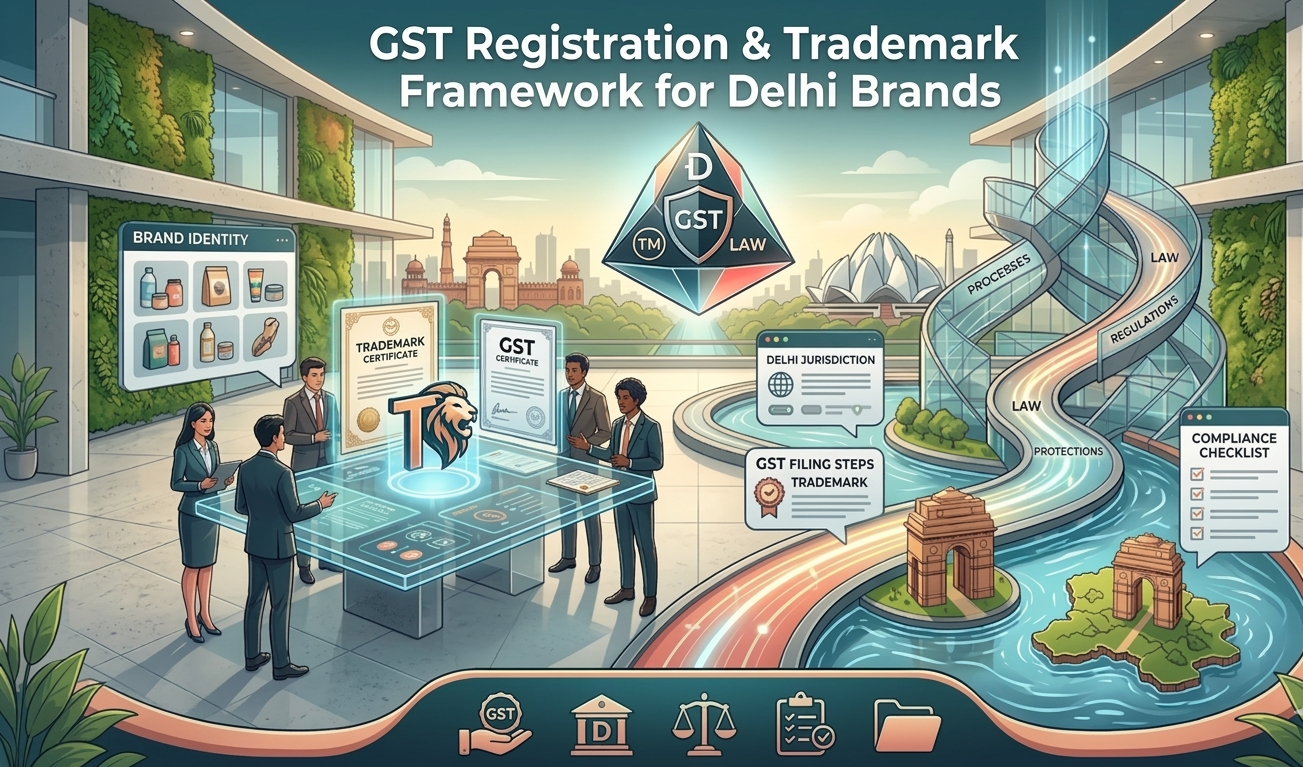
GST registration in Delhi explained for startups planning trademark registration. Learn how tax compliance supports brand protection and business growth.
When it comes to launching a new brand, it is not just about creating a product or providing a service. Other steps need to be taken to ensure that the business is legally structured and protected. Two of these steps are GST registration in Delhi and trademark registration.
For new businesses or startups in the market, it is vital to know how GST registration and trademark registration are beneficial for their business operations.
Understanding GST Registration in Delhi
GST or Goods and Services Tax is India’s single tax system that is levied on the sale of goods and services. If a business crosses the specified turnover limit or engages in any type of business activity, it is mandatory to register for GST Registration in Delhi.
After GST registration, businesses are legally empowered to collect taxes from their customers and pass them on to the Indian government. Moreover, businesses are also eligible to claim input tax credit on goods and services procured for day-to-day business activities, thus enhancing business transparency.
For new brands looking to gain trust in the market, GST registration is perhaps the most fundamental requirement to establish a legitimate business identity in Delhi.
GST Registration: The Importance for New Brands
When you launch your new brand and start selling your products and services, whether it is through the digital platform or across state borders, you need to get your GST registration done, as it is quite essential for your new brand. Without GST registration in Delhi, you might face some legal issues and be stuck dealing with vendors and big clients.
Some of the advantages that new brands can enjoy with GST registration are as follows:
– The brand will be legally recognised as a GST-compliant brand.
– The brand can charge GST and can also claim it when they purchase any goods.
– The brand will gain the trust of vendors and customers.
– The brand can sell its products on the e-commerce platform.
For new brands that want to grow and be successful in the long term, being GST compliant is also important, as it will show the world that your brand is professional and trustworthy.
Understanding Trademark Registration
While GST helps keep taxes in control, trademark registration helps keep your brand’s identity in control, too. A trademark can refer to your business name, logo, slogan, symbols, etc., which make your brand different from others.
When you register your trademark, you are giving yourself exclusive rights to use your trademark for your products and services. It will prevent your competitors from using your trademark as well.
For new businesses, trademark registration helps avoid controversies and increases brand awareness.
How GST Registration and Trademark Protection Work Together Hand in Hand
A lot of business founders treat these two aspects as separate tasks, but in reality, they go hand in hand with each other. GST registration in Delhi helps a business establish itself as a legitimate business activity, while trademark protection helps safeguard the unique name or symbol that a business has come to rely on for its operations.
Take a business, for instance, that sells goods with a unique name or symbol. The GST registration helps this business operate within a legitimate tax framework, while trademark protection helps safeguard this name or symbol from being used by others.
What is the right time for a new brand to register for trademark protection?
In an ideal scenario, you should register for a trademark as soon as you finalise your brand name or logo. If you wait too long, you’re giving someone else a chance to register your trademark before you do.
For startups that are already GST registered in Delhi and are already selling or operating their business, this is a sweet spot for them to register for a trademark.
Common Pitfalls for Startups to Dodge
When it comes to GST regulations and trademarks, new brands can fall into some common pitfalls that can be avoided with proper strategies, such as:
– Selecting the brand name without performing due diligence on the trademark
– Delaying the registration of the trademark till the brand is popular
– Ignoring GST registration
– Inconsistency in sharing the details with the government
A proper and coherent approach towards both registration processes can help new brands dodge legal issues and gain the trust of consumers.
Developing a Strong Foundation for Your Brand in Legal and Financial Terms
A successful brand is not just about branding and marketing. It is also about legal and financial compliance. GST registration helps your business continue to run smoothly, and trademark registration will help you protect your brand’s identity and worth.
If you can take care of these two things early in your business journey, you can focus more on growing your business without the fear of legal and financial hurdles and misuse of your brand.
For new ventures or startups, it is vital to understand how tax compliance fits in with brand protection. GST registration in Delhi enables a business to operate legally and manage taxes effectively, whereas trademark registration secures its brand identity, which differentiates it from others in the market.
At LexproAdvice, we are here to provide you with professional guidance in case you need assistance with tax compliance and intellectual property services to build, protect, and strengthen your brand.